
I look around Canada, and I do not recognize the country I grew up in. It is a refrain I hear increasingly from Canadians of my generation. As I walk the streets of Toronto, I am struck by the filth and decay, and how dramatically the demographics of the country have changed. I can be on an elevator with ten people and be the only white person and not understand a single language being spoken. I grew up in a neighbourhood where I knew one Chinese kid and one black kid; that was the extent of diversity in the Canadian neighbourhood I knew in the ’70s and ’80s.
“You can’t say that out loud, dbro,” or “that’s racist to think that,” or “you only see the negative and not the positive contributions of immigrants,” and so on and so on and so on. There seems to be little willingness to have an open and honest discussion about the changes taking place in what was once a remarkably safe and stable country. The quality of life has been negatively affected by immigration by every single measure.
I shouldn’t have to state this, but I will just so it’s perfectly clear: I believe all men are of equal value, as they are all image bearers of God. Not all possess the same abilities, nor will there ever be a world that will generate equal outcomes for all people; but all are of equal worth as human beings.
The equal worth of every individual, however, does not require us to regard every culture, religion, or system of governance as equal, for some are inferior by every and any standard of comparison. I will fully admit that I am a “cultural bigot;” I value some cultures and cultural traditions more highly than others and believe some are superior by virtue of the societies they produce. This is both a matter of personal preference and the observable differences in outcomes. I like clean streets and well-kept lawns. I like safety and orderliness. I like living in a society where people are polite and have standards that are considerate of others. These are not insignificant things; they contribute enormously to the quality of everyday life, and in a fallen world societal homogeneity is the safest for everyone everywhere.
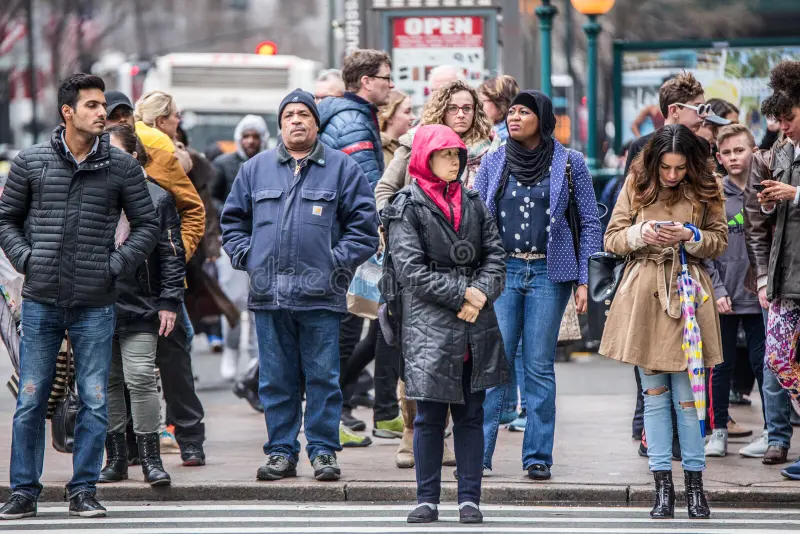
I recently read an article by an Indian woman who travelled to Europe and was stunned at how much better society was. The reality was painful for her to come to grips with. She wrote:
“My first ‘foreign’ trip was at the age of 21- the perfect age to be thinking about self, world and life too elaborately. I still remember the first evening I stepped out of my dorm room in Paris to fix myself something to eat. It was a calm weekday evening and the sky was a beautiful shade of pink I’d hardly seen in Indian cities. I spotted a pizza shop across the road that I badly wanted to dash to, the only issue being that no other pedestrian was crossing the empty road yet. I was confused. I could have cat walked across the street this empty but every other pedestrian was waiting by the signal, that was a bright red for crossing. I heard a sound, the signal turned green and suddenly the crossing had humans dashing across it. I followed suit.
That evening, I wondered over pizza what the Parisians were made of? On an empty road, where no one was noticing, how did a group of 10 strangers agree on waiting for the signal to turn green to cross a road they could have easily crossed a while back. No one seemed hurried; no one wanted to break the rules- and the most perplexing bit was- there was no enforcer of the rule. Just pure civic sense and lack of urgency. To be honest, for the remaining months that I spent across Spain, Portugal, the Netherlands, Belgium and France, I struggled sorely with this. To confess- I, in fact, broke the rules a couple of times and crossed the road when I was running late.
Growing up, I’d been taught differently. So had everyone around me. I was aware that following the queue was the right thing, but it was also an understood fact that the real smart ones knew how to break the queue and go first. We Indians love going first in moments where it matters the least. The covert sense of pride when we break a long line and get our stuff billed real quick, or when we get our driving license without really passing the test, or when we bypass a police stop while drunk driving. We feel larger than life, like we’ve hacked the system and won an invisible race we run all our lives. If my grandfather watched those Europeans wait across the street while the street was empty- he’d have called them naive. Stupid. Not ready for the ‘real life’. But being in Europe for months, watching the Europeans not know of our invisible race of breaking lines and going first made me wonder if the real life lies at the race or the absense of it.
It’s not possible for a mass society to function in any meaningful sense with two different sets of rules. Either a higher standard has to be accepted and enforced or society collapses to the lowest common denominator.
And in a world with 1.6 billion Indians, democracy means that it is the Indian standards that will become the legal and de facto societal ones. Which is why India should be reserved for Indians, and Europe should be reserved for people of European descent.
Because however mutually good the will, coexistence on a societal scale is absolutely impossible.”
It is impossible and we become more increasingly aware of it every single day. But we have to be honest and ask ourselves: what is it that actually holds a nation together?
We have long heard the mantra “diversity is our strength,” repeated as though it were an indisputable axiom, above questioning or scrutiny. Yet diversity always leads to greater societal problems. Always. A great society and culture requires unity.
There is strength in unity. Shared values, common customs, a common language and a sense of collective responsibility provide a foundation upon which social trust can be built. Imagine if every member of a family spoke a different language, observed entirely different customs and celebrated different holidays. Would we think for a second that that family would be close and functional? Of course not. Would maintaining a sense of unity within that family not require considerably more effort? Wouldn’t the incidences of strife and conflict be far greater? Of course.
Multiculturalism, when pursued at the expense of a common national identity, risks creating separate communities rather than a cohesive nation. It is precisely this need for a common cultural foundation that makes immigration from similar cultures superior to the third world immigration we have witnessed.
Even something as seemingly simple as official bilingualism in Canada has been a source of considerable political and cultural tension between English and French-speaking populations. Introduce more languages, more religions, and more competing cultural traditions without a pride in the established common foundation, and the challenge of maintaining national unity becomes increasingly difficult.
Canada’s decline, in my view, has occurred alongside an increasingly aggressive immigration policy. We have witnessed growing pressure on public services, health care, housing, infrastructure and the institutions upon which Canadians have long depended. Immigration should never be about what a country can provide to those who arrive, but about what those who arrive can contribute to the country. There should be an expectation of reciprocity, responsibility and respect for the society that welcomes them and a desire to leave the failing attributes of their nations behind.
Canada, like much of the Western world, was founded upon a tradition deeply influenced by Christian moral ideals. Its institutions, understanding of individual liberty, and conception of human dignity owe much to that inheritance. The founders of Canada, 36 white men of Christian heritage, would not understand why they have been so vilified by the multicultural ignoramuses now in control who have opened the flood gates to Chinese, Indians, and Muslins from the Arab world. This system built over generations requires an understanding of the principles and responsibilities that allowed it to flourish that the “new inhabitants” do not possess. A nation cannot be maintained and strengthened by those who never built it.
There seems to be remarkably little appetite among our political leaders to discuss the obvious incompatibilities of different people groups openly. At what point does the persistent disregard for a nation’s cultural inheritance cease to be merely a consequence of misguided policy, rather than an evil plan to replace the nation’s population will those more easily controllable? That is what we are witnessing. Canadian citizens should not have inferior cultures imported en masse by their political leaders. It is without question an act of evil which weakens a nation, and harms the citizenry.
Immigration policy should serve the long-term interests of the nation. It should prioritize those willing to respect its laws and customs, contribute to its continued prosperity and stability, and strengthen the principles upon which the nation was founded. A nation cannot indefinitely neglect the very things that made it a desirable place to live and expect those qualities to endure. There is a profound difference between welcoming people into a civilization and in so doing, abandoning the principles upon which that civilization was built.
Canada would do well to remember that distinction.